
|
MAILING LIST |
Join to receive coupons, discounts and
fascinating information you won't find anywhere else!
Subscribe Me
|
|
By Stephen Shore
|
By Stephen Shore
|
|
|
Learn from
the true experts - those on the spectrum
Stephen
Shore
Stephen experienced regressive autism, lost functional communication and was recommended for
institutionalization. Today he is
independent, happy and successful.
He is a world renowned speaker, teacher
and an acclaimed author.
Stephen's
books explain some of the puzzling
behaviors of autism and how to cope with
the challenges.
|
-
Stephen's
Interview
-
-
What age did you start speaking and what
was your prognosis at that time?
-
After 18 months of typical development I experienced “Regressive
Autism”, which I refer to as the “Autism
Bomb.” I say this because it can feel
very much like the explosive power of a
bomb shattering the lives of the person
with autism as well as family members.
It took a full year for my parents to
receive a diagnosis of “Atypical
Development, strong autistic tendencies,
and psychotic” as well as being termed
as the “sickest child” the
diagnosticians had ever seen. My
parents were told to put me in an
institution. Fortunately, they
refused. They convinced the school to
accept me in a year and I received what
we would now term as an “intensive
home-based early intervention program
emphasizing music, movement, sensory
integration, narration, and imitation.”
My speech started to return at age 4.
By age 5 my verbal interaction skills
were about par with what would be
expected at this age level.
-
-
When did you realize you were different
to everyone else?
-
Since age 5 I knew I was different than most other people. I was
very fortunate in that my parents openly
used the term “autism” around the house
just like any other word. The important
implication is that whilst we didn’t
know much about the condition it
certainly helped to explain a lot of
differences. For this reason I advocate
telling a child with autism that they
are on the spectrum as soon as possible
and of course in a developmentally
appropriate manner. Regrettably
disclosure to a person with autism about
their condition commonly occurs later in
life, often creating much confusion for
a person who deep inside knows they have
a difference, but has no way to
conceptualize the situation. In
response to this challenge I have
developed a four-step strength-based
approach to inform children and adults
who have autism that they are on the
spectrum.
-
-
Are you independent/currently employed
and if so, what work do you do?
-
I help people with autism lead fulfilling and productive lives to
the greatest extent possible. This
mission is accomplished through
Autism Spectrum Disorder Consulting
where I engage in the following four
activities.
-
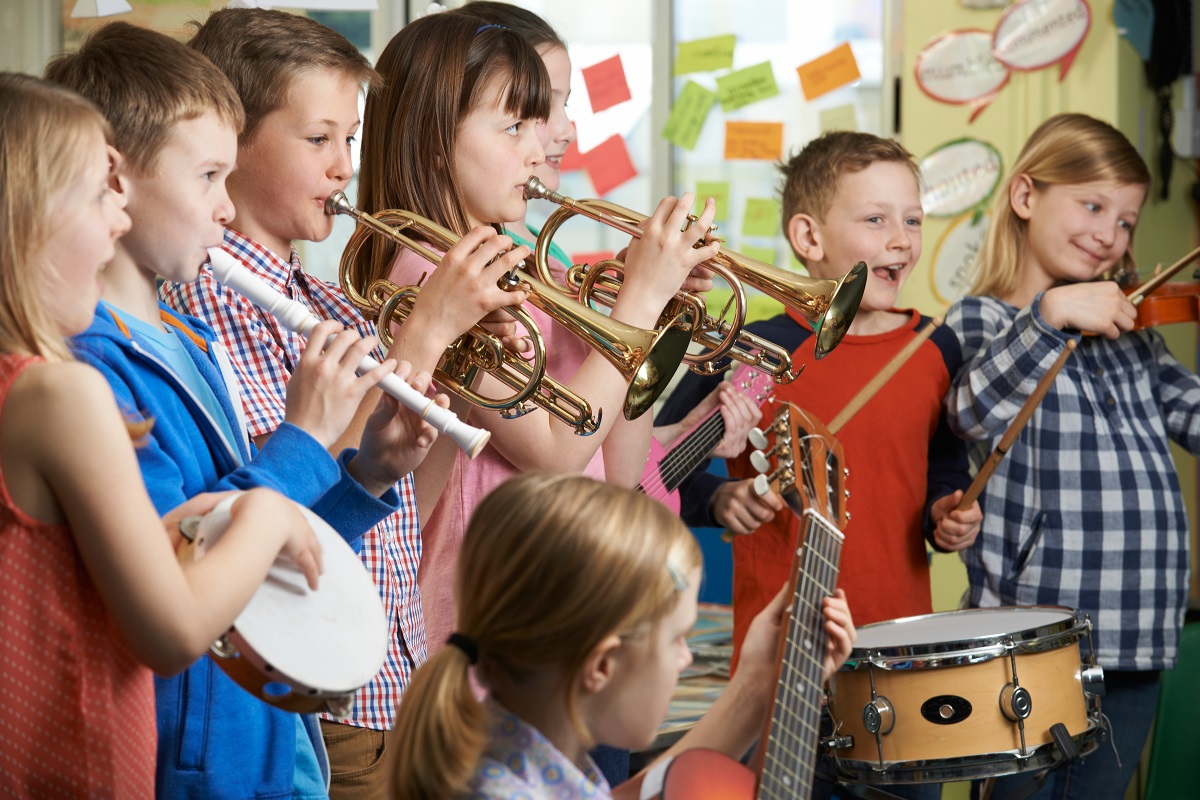
First, I give music lessons to children on the autism spectrum. In
addition to the therapeutic benefits of
engaging with music, learning to play an
instrument provides a real life tool in
which to interact with others and to get
involved in the community by joining a
musical ensemble. Plus… it’s just plain
old fun! We need more of that.
-
Secondly, I consult to schools systems and present on issues
related to the autism spectrum
internationally. At this time I have
presented in 39 of the 50 states as well
as 6 out of 7 continents. Third, I
teach courses and special education and
autism to prospective and continuing
teachers at the college level. Other
courses I have taught include statistics
and other math courses, computers, and a
number of music classes as well.
Finally, I write books and article
related to the autism spectrum. More
about these publications can be found on
my website.
-
-
Are you married and do you have
children?
-
Dating was always confusing to me because I never properly
perceived nonverbal cues. I met my
wife in a graduate program in music
education. We were walking on a beach
one day and she suddenly held my hand,
kissed and hugged me. By then I had a
form of social story worked out to help
me decode if a woman was interested in
dating me. That event occurred over 20
years ago and we have now been married
for almost 18 years. I feel we have
developed a great understanding of each
other and life together just gets better
and better! We have no children as we
feel our lifestyle is not conducive to
good child rearing. However, there are
thousands of children with autism within
bicycling distance of my home – and
around the world – whom I can play and
be with any time I want.
-
-
Do you have any accomplishments you'd
like to mention? (Such as education,
work achievements, personal
accomplishments)
-
My latest
accomplishment is that I finished my
doctorate in special education with a
focus on the autism spectrum late last
year. My dissertation Examining Five
Promising Approaches for Treating
Children on the Autism Spectrum
focuses on matching best practice to the
needs of children on the autism
spectrum. Another accomplishment
includes writing three books on autism
titled
-
Beyond the Wall: Personal
Experiences with Autism and Asperger
Syndrome
-
Ask and Tell: Self-Advocacy and
Disclosure for People on the Autism
Spectrum
-
Understanding Autism for Dummies
-
There are
more books and a DVD in the works as
well. Yet other accomplishments
include being married for almost 18
years, as well as finding a way to help
others on the autism spectrum. Every
time I can help someone develop greater
understanding about autism I feel is an
accomplishment as well.
-
-
What age did you start having meaningful
conversations (a back and forth, rather
than just answering questions or talking
about your interests?)
-
Although I lost functional communication skills at age 18 months,
only to have them begin to return as a
four-year-old, I started having true
back and forth conversations at age 5.
That’s when my speech had pretty much
normalized.
-
-
What age did you become interested in
making friends?
-
I have been interested in making friends since about age five. It
is my sense that people with autism
don’t want to have friends is a myth.
What seems more accurate is that those
of us on the autism spectrum have a
different way of making friends.
Additionally, some of the skills needed
to make friends may need direct
instruction rather than expecting people
with autism to learn by mere
observation.
-
-
What special interests did you have as a
child? Do you have special interests
now?
-
I had many special interests as a child. Sometimes there was more
than one at a time. These special
interests included:
|
airplanes |
astronomy |
bicycles |
|
earthquakes |
medicine |
chemistry |
|
mechanics |
electricity |
electronics |
|
computers |
hardware |
tools |
|
psychology |
music |
rocks |
|
geology |
geography |
locks |
|
cats |
dinosaurs |
watches |
|
shiatsu |
yoga |
autism |
-
As an adult I still maintain a number of special interests. The
strongest ones for me at this time
include music, bicycles, psychology, and
autism. I believe engaging special
interests of people with autism are the
key towards success and fulfillment in
employment, education, relationships,
and in other areas of life.
What type of people do you relate to?
Are you drawn to specific qualities or
common interests?
As a child most of my friends were older than I was. In later
years, many were from other countries
and cultures. I noted that my
experiences were common with others on
the autism spectrum as well. While
people know what to expect from their
own culture, other cultures do not
detect as many differences. People from
another culture have their own
challenges integrating into a society
and they may be more tolerant or even
appreciative of people with
differences. In fact, Tony Attwoods has
research on his website indicated that
the most successful relationships with
people on the autism spectrum involves
others with difference in culture, age,
religion, and many other vectors. I
tend to be attracted to people having
passions for various interests. Other
specific qualities include persons who
are honest in the communication rather
than giving mixed messages. Certainly
having interests in common with mine can
be helpful in making friends but aren’t
a requirement. Some of my friends are
on the autism spectrum whereas others
are not. I think it’s important for
people with autism to have ties to their
community in the form of friendship with
others on the autism spectrum. However,
I think having friendships with people
outside of the autism spectrum are also
necessary towards leading a balanced
life.
Do you have specific routines you like
to keep and what coping strategies do
you use when things change unexpectedly?
Some specific routines I have include waking my wife in the early
morning and helping her prepare for her
day. I prepare her breakfast and lunch
and warm up the car during the winter.
After she departs I will sleep for about
an hour and then start work at home.
Most of my work consists of giving music
lessons for children with autism and
writing is done at home. Living in a
home engenders all kinds of domestic
routines. In many ways my wife and I
have a gender role reversal regarding
societal expectations of work and
keeping a home. However, it works well
for us and that’s what matters. I
travel by plane about 50 times a year to
consult on and present at conferences
related to autism. Although security
and other procedures may often seem to
be a bothersome waste of time, they
provide a sense of predictability.
Flight delays and cancellations are very
common. However, there is a routine to
those as well. There will be a
later flight one can catch if needed.
At worst, an overnight in a hotel near
the airport will be needed.
Fortunately, airplanes is a special
interest of mine so I have gotten to the
point where I know where the good seats
are on different airplanes, figured out
how to increase my chances for scoring
the ever-elusive upgrade, and even can
tell the difference between Boeing
747-100’s, 200’s, and 400’s. There is
no 300 but there will be an 800. Travel
is often a great challenge for people
with autism. In response to that
challenge I plan on creating a resource
to promote safe travel for people with
autism.
If you could change one thing about
neurotypicals, what would it be?
Greater awareness, acceptance, and appreciation of people with
autism and other differences would be a
great change. I like to think of autism
as a different rather than a disordered
way of being. This does not obviate the
fact that there can be many aspects of
autism that are disordering. Not having
developed a reliable means of
communication, suffering from digestive
problems and not pooping for 2 weeks, or
dealing with sensory issues that disrupt
interaction with others and learning are
all serious problems that must be
addressed. Through the use of
appropriate interventions in the
educational/developmental/behavioral,
sensory integration, and biomedical
realms we can help people with autism
lead fulfilling and productive lives
with their differences.
Did you have self stimulatory behavior
as a child and do you have any now? If
so, how do you deal with this in public?
Reframing self-stimulatory behavior as self-regulatory behavior is
more helpful in understanding its cause,
what it represents, and what to do about
it. These behaviors serve different
purposes such as calming a person down
or keeping them awake. That said I did
have such behaviors as a child. I
remember my parents telling me to stop
flapping my hands. However, if this
type of behavior is recognized as an
effort towards self-regulation, then it
becomes easier to think about
redirecting, rather than trying to stop
the behavior.
How do you deal with sensory challenges
when you have to appear at occasions
such as a wedding or social event?
Adding structure into these events can be very helpful.
Additionally, I make sure to take breaks
before I become overwhelmed with too
much sensory input. One example of my
structuring a situation is to find a
piano and route my interactions as the
musician of the party. Family parties
and other socially based gatherings can
be very difficult for people with autism
to navigate. I think it is important to
find some way to make sure that there is
structure in these situations. For
example, perhaps a person with autism
could help with setting the table at a
family gathering or given some other
“job”. A goal to strive for is to
educate a person with autism when to
recognize when a social gathering is
unstructured and give him or her tools
to cope such as what I do when I find a
piano.
Are you close to your sibling(s) and how
was it watching your sibling succeed at
things that were much more difficult for
you, particularly if he/she/they were
younger?
We had quite a wild time growing up. I am the youngest. My brother
who is two years older was diagnosed
with mild to moderate retardation. My
sister who is four years my senior
seemed to get all of the “typical” genes
of the family. I feel very lucky
because my parents created a supporting
and loving environment where people were
accepted for whom they were. At the
same time, they realized that if my
brother and I were to lead fulfilling
and productive lives to the fullest
extent possible there would be many
challenges to overcome. As siblings we
still keep in touch and enjoy each
other’s company when we can get
together.
If you could advise parents about one
thing, what would it be?
When your child is diagnosed with autism, he or she is the same
child you had before the diagnosis.
It’s also important to realize that a
parent will often go through a period of
often painful mourning for the child
they thought or wish they had. It’s
nothing to be ashamed of and is a
natural process. Eventually, acceptance
of the child comes with the realization
that there may be many significant
challenges to overcome if their
offspring is to lead a fulfilling and
productive life. In short, the
potential of your child is the same as
with every other child – unlimited. The
challenge is to figure out how to access
this potential. That is what
interventions and educational techniques
help us do.
If you could advise teachers about one
thing, what would it be?
When I give teacher in-services, one aspect I emphasize is learning
styles. There is a myth that all
persons with autism have visually based
learning styles. From my interactions
with my friends and colleagues on the
autism spectrum I think it’s more
accurate to consider the following.
While most people with autism are
visually based not all of us are.
Therefore, it’s important to be
sensitive to the possibility that a
person with autism may favor the
kinesthetic, aural, or other modality
for learning. What can be said is that
whatever the learning style is it will
probably be to an extreme.
If a person close to you is upset about
something, how does it affect you? Do
you feel empathy for them?
It’s a two-step cognitive. At first I will fuse to that other
person’s emotion and then start
wondering why I have such a strong
emotion that seems out of context for a
situation. At this point I will then
ask the person I am near if they are
having that same emotion. Often I will
find out they are. For example, I might
feel anxious about something but can’t
quite put my finger on it. I then may
ask me wife if she is having
anxiety about something. Often she will
indicate she is. With confirmation of
her emotional state I am then able to
separate from her emotion and feel
for her rather than just fusing to
the emotion. That is empathy. Most
people develop empathy just through
observation of another person’s
emotional state. For many people with
autism, achieving an empathic state
require cognitive step like I just
described.
Can you assess how people are feeling by
their expressions? If not, how have you
learned to deal with this?
Reading facial expressions can be very difficult for me. However,
I can often perceive when someone is
having an emotion – just not the
specific one. Therefore, I will ask
probing questions to verify that I am
detecting an emotion and to find out
what it is.
Can you drive a car and do you have a
license? If not, does it upset you that
you are not able to drive?
Although I drive and own a car, I much prefer to ride my bicycle
because it is more fun and gives me the
proprioceptive and vestibular input I
seek. Specifically, for people on the
autism spectrum it does seem that fewer
of us drive then in the general
population. That may be due to the
greater incidence of sensory and
perceptual challenges in people with
autism then in the greater population.
Do you have anything you would like to
add?
With today’s research and intervention,
the “Bomb” in the term “Autism Bomb”
need not be as destructive as one might
initially fear. People with autism have
a multitude of strengths that can be
beneficial to everyone. The potential of
those with autism is unlimited. Finding
ways to engage the strengths of people
with autism will greatly increase the
chances for leading fulfilling and
productive lives. It is the challenge
of persons supporting those with autism,
in concert with people on the autism
spectrum, to find ways of unlocking this
potential.
We are honored that
Stephen has taken the
time to share his experience. If you appreciate it
too,
PLEASE
be kind enough to let him know!
-
-
|
|
|