

THE GREATNESS OF AUTISM
LEARN FROM THE TRUE EXPERTS - THOSE WITH AUTISM
-
SEAN BARRON
- Spinning objects, switching lights on and off, throwing things and rigid behavior is how Sean spent much of his time as a child. Today he is free of autism. He articulates why he felt the need to engage in the ritualistic behaviors that so many of us find hard to understand. Sean's books reveal a fascinating perspective of life on the autism spectrum.
- Sean's Interview
- What age did you become verbal and what was your prognosis at that time?
- I didn't really use words until close to age five (yet I could tell time before that). When language came, it was often stilted and peppered with echolalia. I often referred to myself in the third person. The prognosis was quite grim. I was diagnosed in 1965 by a doctor, who like so many professionals at that time believed that autism was the next thing to a death sentence. In essence, it wasn't a matter of whether I would be institutionalized, but rather a question of when.
- As a child, did you enjoy playing the same games as your peers? If not, what were your interests?
- Prior to nursery school I was quite solitary, except for playing with my younger sister, Megan. I spent the bulk of my earliest years being transfixed on spinning objects, switching lights on and off, and manipulating various objects such as Tinker Toys. I also devised categories where I grouped people and objects. All of this was done in an attempt to create order from chaos.
- What age did you become interested in your peers and when did you start making friends?
- This didn't start to gel until I was 16, after we had moved to California from Ohio. Fortunately, I found myself in a new school where no one knew my troubled background and ?history? of having been teased, bullied, etc. Students at the Sylmar Calif. high school seemed to have a wider tolerance of what was acceptable behavior, unlike my previous school. This made me relax enough to start being more open to friendships. At the same time, my sister had a network of friends and I slowly ingratiated myself with them and found acceptance. In 11th grade I went with several of these friends to a high school play. This was the first time I really went out socially. For many people, this may have been a routine occurrence, but to me, this social event was a revelation.
- Can you describe some of the repetitive behavior you had as a child and explain the purpose these behaviors served?
- Such behaviors included, but certainly weren't limited to, tossing objects into a backyard tree to watch them fall or get caught. Switching lights off and on; watching our washing machine spin; and manipulating a variety of toys and objects. Uniting these and other similar actions was a quest to somehow convert pure chaos into a semblance of order, while compartmentalizing was an attempt to make sense of my environment.
- Can you describe some of the ?rules? you had as a child and how you reacted if things didn't
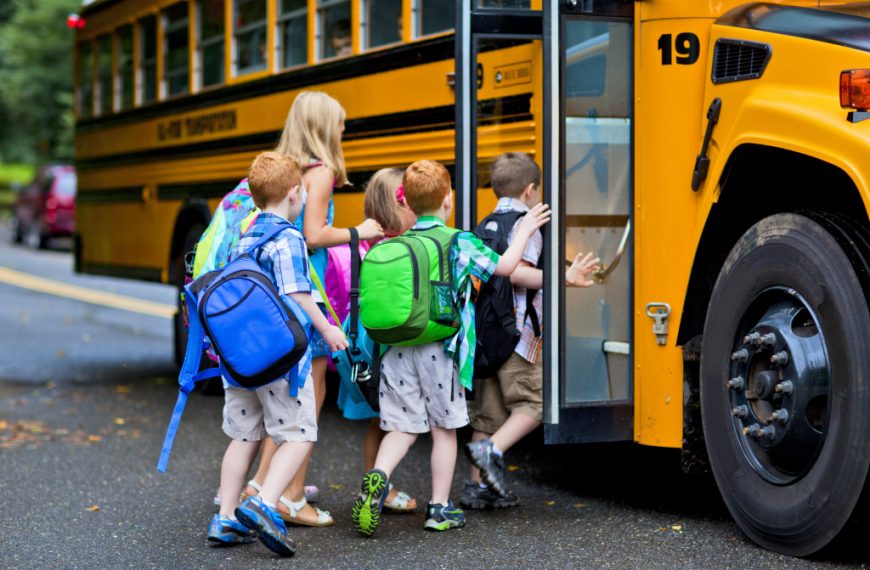
go the way you expected? - Since it was infinitely easier to "control" objects and predict outcomes as opposed to people, I devised a variety of rules over the years for people. I did this to try and fit them into a box of sorts, so that I could simplify their complexities. I almost always devised these rules based on some fixation. For example, I had an intense interest in school buses during my middle school years. I loved to watch them line up in the rear parking lot, prior to the end of the school day and always tried to be the last person to board. Similarly, I devised a rule that my three family members were to come to the breakfast table each weekday morning in a certain order (in much the same way that the buses arrived each afternoon). If this or a similar rule was violated, I experienced a level of anger way out of proportion to the action. If the morning breakfast table rule was broken, it was not uncommon for me to come home from school later that day with emotional residue. Interestingly, in my mind it was OK for my family to come downstairs in any order they wished on weekends because the buses weren't running.
- How old were you when you realized you were different from others and what brought about this awareness?
- I would say this painfully dawned on me around age five, when I entered kindergarten. I quickly realized the social Grand Canyon gap that was evident between me and the other pupils. Many of the children shunned, ignored or teased me because I was socially aloof, and I had no idea how to relate to them.
- How was your relationship with your family as a child and how is it today?
- I enjoy a very close relationship with my mother, father and sister, the kind in which many "I love yous" are routinely exchanged. During my childhood, teenage and young adult years, however, my relationship with the family was tumultuous and strained. This was largely because they were trying to reach the person they firmly felt was trapped under the veneer of autism, against a backdrop of frustratingly repetitious behaviors, lack of eye contact and social problems. I feel extremely blessed that they had the wisdom to realize that I didn't want to be the way I was and fought like crazy on my behalf.
- Are you currently employed and if so, what do you do?
- I work as a free-lance reporter for The Vindicator, Youngstown, Ohio's largest paper, and write human interest stories, among other things. I've worked in this capacity since receiving a copy editing/reporting internship in August 2000 as part of my journalism major.
- Do you have any accomplishments you'd like to mention? (Such as education, work achievements, personal accomplishments)
- Perhaps not surprisingly, I feel most of my proudest achievements have come post autism. I've won many accolades and a few awards for the book "There,s a Boy in Here," and was the area's Big Brothers/Big Sisters organization's Big Brother of the Year in 1998. I also received a plaque for being part of a prison ministry of sorts in the late 1990's for having on several occasions visited an inmate at a private prison. I once again work at our local phone crisis center, helping people in crisis or who are suicidal, after a nearly 20-year hiatus. I previously worked at the center in the 1980's (I was still working through autism.) Now that I'm better equipped to help others, I wanted to replace my prior experience with current positive ones, and of course to give back to the community.
- Do you still consider yourself on the autism spectrum?
- I do not, in that I consider myself healed from the disorder. I use the word "healed" as opposed to "recovered," because some people feel autism isn't something one recovers from. Nevertheless, autism in no way impairs my ability to function daily, nor does it interfere with my desire to socialize, work or in any other way maintain a normal life.
- At what age do you think children should be told about their diagnosis?
- I don't feel this is age related per se; I think it depends on when parents feel ready. I was diagnosed at age three and my mother and father were forthright by telling me right away - and on several occasions in subsequent years. My inability to think abstractly, however, prevented me from understanding what autism meant until much later.
- Do you find it offensive if someone is referred to as ?autistic? rather than ?a person with autism??
- I'm not offended as much as I am disheartened. I'm a firm believer - without resorting to political correctness - in placing the person first, the disability second. Most of us don't refer to an individual diagnosed with cancer as "the cancer person." So it is with someone on the autism spectrum. If you could change one thing about neurotypicals, what would it be? Many people today have more awareness of autism than was the case 20 years ago. I guess I would like a greater number of "typical" people to view and treat those on the spectrum as unique, instead of stereotyping the diagnosis and automatically equating autism with Dustin Hoffman's character in "Rain Man."
- If you could advise parents about one thing, what would it be?
- I hesitate to give advice to parents or teachers because I feel they know their child better than anyone. Instead, I try to offer suggestions (mainly based on my experiences) that worked for me, which I hope will be beneficial. As I see it, advice seems a bit judgmental and implies that I know what's best for the person when I probably do not. In speaking at conferences, I often let parents know how important it is to continually tell their children with autism that they're loved. And when it comes to assessing themselves, I try to get across to parents and professionals a form of what I call FID: Be flexible, improvise and don't feel like a failure if it doesn't always work.
- If you could advise teachers about one thing, what would it be?
- Essentially as above, but also to be sensitive to the fact that if you've met one person with autism, you've met one person with autism - to avoid, in other words, lumping them into categories. it's important, of course, to have classroom rules, be consistent and so on, but to also understand that a child with autism may break a rule for many reasons other than sheer defiance and testing of wills.
- Is there anything else you would like to add?
- My perspective on my autism underwent a 180-degree transformation upon having written the two books "There's a Boy In Here" and "Unwritten Rules of Social Relationships." For most of my life I viewed my disability as a curse and wanted more than anything simply to be normal. Now, however, I see autism as a blessing since it paved the way for me to have the life I have. I have enjoyed many benefits from writing the above two books as well as being on the speaking circuit. It feels good to be in a position where I can use my experiences as tools to help others going through the difficulties of being on the autism spectrum. Nevertheless, that's not to say that I would ever wish to be autistic; I just see it in a much more objective and healthy light.
- IF YOU HAVE ENJOYED READING SEAN'S INTERVIEW, PLEASE LET HIM KNOW!